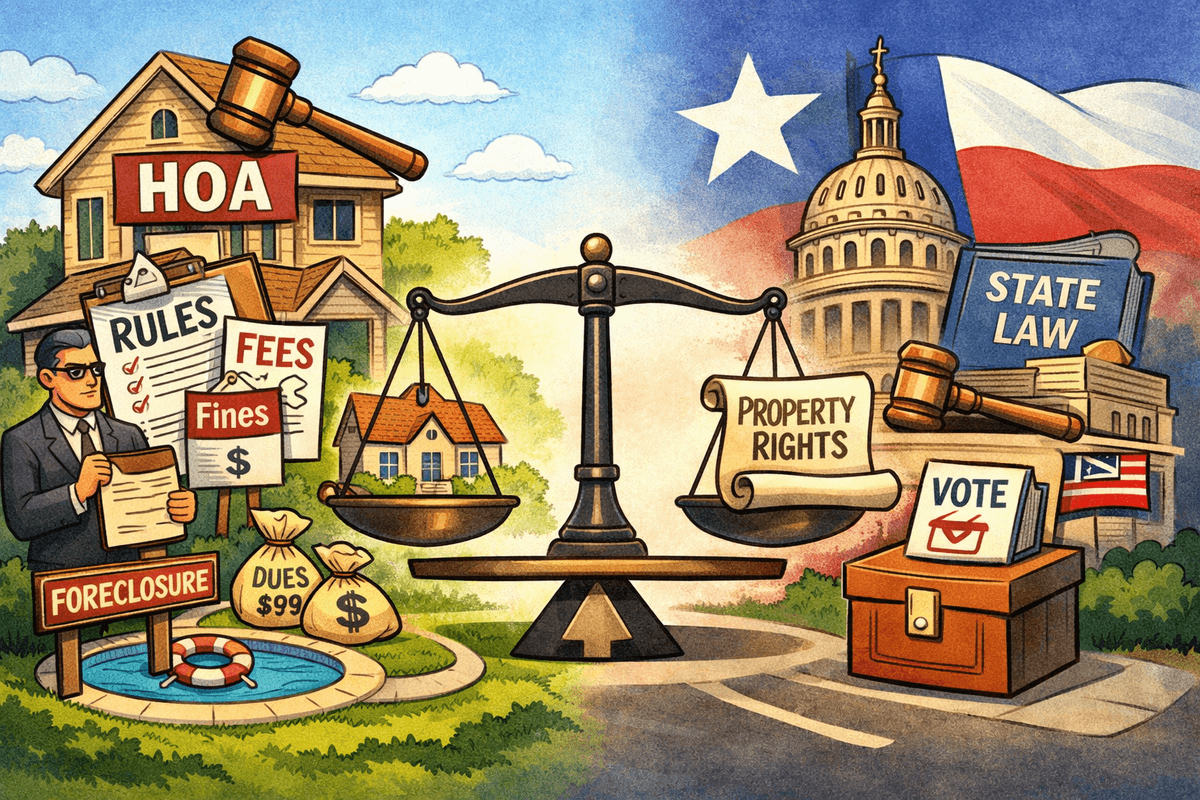
Homeowners’ associations (HOAs) have become a defining feature of modern Texas neighborhoods, including Devonshire. Their purpose is clear: maintain property values, enforce community standards, and provide amenities that make suburban life attractive. Yet as HOAs assume roles once reserved for local governments—managing infrastructure, enforcing rules, and even wielding foreclosure powers—their growing authority has drawn scrutiny from lawmakers. The next legislative session could reshape the balance between community governance and individual property rights.
The Local Model: Devonshire’s HOA in Practice
Devonshire’s HOA exemplifies the model many Texans know well. It oversees architectural guidelines, maintains common spaces, and enforces deed restrictions designed to preserve neighborhood aesthetics. These functions can enhance quality of life and protect long-term property values. But they also come with costs: annual assessments, transfer fees, and compliance obligations that can feel burdensome when transparency falters.
In fact, homeowners will see a 5% increase in assessments for 2026, raising annual dues for single-family homes to $780 and townhome dues to $375 per month. The board cites inflation, escalating maintenance needs, and skyrocketing insurance premiums as key drivers. Planned projects include resurfacing the West Pool, replacing mastic at the main pool, upgrading access systems, and repairing aging infrastructure. The increase also addresses delinquent assessments—over $373,000 as of October 2025—and aims to rebuild reserves to avoid special assessments in the future.
National inflation has eased to roughly 2.7% year-over-year by the end of 2025, but local inflation has been lower than the national averages.
Market Headwinds: Prices Decline, Rates Remain Elevated
Economic factors are weighing heavily on local market conditions. Devonshire’s median home price edged down to $360,995 in Q4 2025, a 5% drop year-over-year, with price per square foot falling to $157—a 2.7% dip compared to Q4 2024. This softening contrasts with rising lease rates and tighter resale volumes.
Mortgage dynamics compound the issue. The 30-year fixed mortgage rate averaged 6.15% as of Dec 31, 2025—only modestly down from its 2025 highs. For many sellers, these elevated rates effectively “lock them in,” deterring moves and constraining both inventory and price mobility.
The State Steps In
According to the Texas REALTORS® legislative brief, lawmakers are preparing to revisit HOA regulation. The association supports reforms that make HOA operations more transparent and resident-friendly, while safeguarding constitutional rights. Among the priorities:
- Regulatory Oversight: HOAs and related nonprofit corporations should register with counties or a state agency, given their authority to impose liens and foreclose.
- Consumer Protections: Extend provisions of the Residential Property Owners Protection Act to condominium regimes.
- Fee Transparency: Impose firm timelines for producing resale certificates and cap excessive document fees.
- Privacy: Limit credit reporting and safeguard homeowners’ financial information.
- Right to Rent: Prevent HOAs from restricting property owners from leasing their homes.
These proposals reflect a broader concern that HOA governance, left unchecked, can infringe on both property rights and free speech. Recent legislative cycles have already begun trimming HOA authority, but lawmakers continue working to ensure fairness and oversight.
Where Tensions May Arise
For communities like Devonshire, the implications are significant. Rental restrictions embedded in HOA covenants may conflict with the proposed statewide “right to rent.” Excessive transfer fees and document charges, already unpopular amid rising living costs, might be capped. Meanwhile, rising assessments—driven partly by inflation—could collide with new fee transparency standards.
Drew Wilkens’ Vision for Devonshire
As state-level debates advance, Devonshire’s Resident Advisory Committee is focused on execution. Board member Drew Wilkens emphasizes transitioning governance to homeowners, improving communication through a new website and AI-enabled app, extending pool seasons post-upgrade, and pioneering sustainability initiatives with the North Texas Municipal Water District—all while monitoring changes in Texas HOA and landscaping laws.
What Homeowners Should Do
Devonshire residents should:
- Understand the assessment increases and the drivers behind them.
- Acknowledge that elevated mortgage rates may dissuade sellers, constraining supply.
- Monitor state legislative reforms, especially those influencing leasing rights and fee transparency.
- Engage with association leadership and participate in board elections and meetings.
Bottom Line: Devonshire is navigating a complex intersection of community governance, state regulation, market pressures, and cost-of-living inflation. For homeowners and buyers, staying informed and involved is the only way to ensure neighborhood values align with both communal interests and evolving legislation.
For personalized real estate advice from a Devonshire expert, call Brendan Hirschmann, REALTOR® at 972-559-4648. Brendan can provide insights and guidance to help you navigate current market trends and make informed decisions.